Global trade to grow 4% in 2026, slower than 4.4% in 2025: UNCTAD
Only social or community posts, or a single source.
What happened
New Delhi: Global trade is expected to grow 4% in 2026 “well above what was anticipated when the conflict in the Middle East began” but slower than 4.4% in 2025, the UN Trade and Development (UNCTAD) said Friday. (GDELT Global Knowledge Graph, 23:30)
Read the reporting
2 reportsGlobal trade to grow 4% in 2026, slower than 4.4% in 2025: UNCTAD
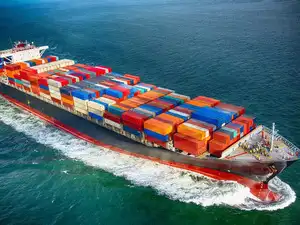
iStock
Global trade to grow 4% in 2026, slower than 4.4% in 2025: UNCTAD
New Delhi: Global trade is expected to grow 4% in 2026 “well above what was anticipated when the conflict in the Middle East began” but slower than 4.4% in 2025, the UN Trade and Development (UNCTAD) said Friday.
In its 2026 Trade and Development Report, the UNCTAD said that in 2026, higher trade values are being driven by price increases amid the energy shock and export controls, investment screening and supply-chain conditions are making strategic sectors harder for new entrants to access.
Global trade reached a record $35 trillion in 2025.
While trade between China and the US has fallen by more than 20% since 2024, East Asia has expanded trade with both China and North America.
“Trade has proven more resilient than expected, but growth teeters on a narrow
base. Global trade grew 4.4% in real terms in 2025 and should expand about 4% in 2026, well above what was anticipated when the conflict in the Middle East began,” UNCTAD said.
The report showed that governments increasingly use industrial, trade, financial and technology policies to pursue economic and national security objectives. Market access and the ability to move into higher-value activities now depend more heavily on technology, finance and geopolitics.
”Artificial intelligence products, comprising advanced computing equipment
deployed primarily in new data centres, have become the main driver of merchandise trade; 82% of value added accrues to four supplier segments in this category,” it said.
On AI, UNCTAD said that apparent resilience, however, masks wide differences across countries and sectors. Only a few economies benefit from the artificial intelligence boom.
The divide compounds long-standing structural challenges – financialization, inequality, fiscal conservatism and climate change.
Issues advancing faster than multilateral rule-making have pushed governments towards unilateral measures, preferential agreements and plurilateral initiatives, according to the report.
Further, the expiration or non-renewal of major preference schemes, together with the increasing use of unilateral tariffs, have abruptly raised the applied tariffs faced by vulnerable exporters.
“The impact is likely to be greatest where countries are highly dependent on a single preference-granting market, have concentrated export structures, or export manufactured or agricultural goods facing high most-favoured nation tariffs,” it said.
As per the report, strategic investment is concentrated in Europe (28.4%) and North America (28%) Even among developing economies, capital is primarily funnelled into developing Asia (26.5%) with China, India, Indonesia, Malaysia and Singapore as leading jurisdictions for new investments.
Slow growth
Global economic growth will likely slow to 2.6% in 2026, down from 2.9% last year but developing economies are projected to grow 4% this year, down from 4.7% in 2025, it said.
Asia is projected to contribute 59% of global growth in 2026.
“Growth in the developing world is bifurcating. A few large economies are driving global expansion, with India fastest among them at 7.3% in 2026,” it said, adding that import-dependent economies absorb the shocks with far less fiscal room and rising debt servicing costs.
(You can now subscribe to our Economic Times WhatsApp channel)
Why it is over
- No engagement data available from these sources; score uses mention signals only
Attention graph
Not enough history in this window yet. The engine measures every five minutes.
Timeline
Where it started
How it spread
- Step 1News outletsGDELT Global Knowledge Graph23:30
Internet reaction
No social or community posts about this yet from the platforms we ingest.
What we know
- Nothing independently established yet.
What we don’t know
- Independent confirmation is missing; treat specifics as unverified
- Only one source so far
Related events
All sources (2)
Attention is measured from these mentions only. Platforms shown: News. We never invent signals for platforms we do not ingest.
Follow for your feed
Follow the topic or the people and places in this story and they shape your For you page. Kept in this browser only.