What Austen and Einstein can teach us about sharing meaningful science
Only social or community posts, or a single source.
What happened
WHAT if the greatest barrier between science and society is not the complexity of scientific discoveries, but the way we communicate them? (Focus Malaysia, 22:21)
Read the reporting
1 reportWhat Austen and Einstein can teach us about sharing meaningful science
WHAT if the greatest barrier between science and society is not the complexity of scientific discoveries, but the way we communicate them?
A researcher may spend years unlocking the secrets of a new material, developing cleaner energy technologies or discovering solutions to environmental challenges.
Yet, if these breakthroughs cannot be explained in ways that people understand and relate to, how much of their value reaches society?
Surprisingly, the answer may lie in an encounter between two extraordinary minds separated by more than a century.
Jane Austen, the novelist who explored the intricacies of human behaviour, and Albert Einstein, the physicist who transformed our understanding of the universe.
In Pride and Prejudice, Austen examines how pride and perception shape relationships.
Her insights offer an unexpected lesson for scientists today where expertise can advance knowledge, but assumptions about what others understand can create barriers to sharing it.
Einstein, meanwhile, is popularly associated with the idea that complex concepts should be explainable in simple terms.
Together, Austen and Einstein invite us to reconsider a fundamental question. Are we communicating science to people, or merely talking at them?
Making science meaningful
Science communication goes beyond presenting research findings or simplifying technical reports.
It connects scientific knowledge with people’s experiences, concerns and aspirations.
Consider solar energy. Scientists may explain the physics of photovoltaic cells, but a family considering solar panels may be more interested in reducing electricity bills, coping with Malaysia’s hot climate and living more sustainably.
The science remains the same, but the story changes to meet the audience’s needs.
Effective science communication helps people understand not only what researchers discover, but also why those discoveries matter.
It can cultivate curiosity, encourage evidence-based decisions, inform public policy and build trust between science and society.
A popular saying attributed to Einstein: “One does not truly understand something unless one can explain it to one’s grandmother.”
Communicating complex ideas clearly is an essential part of making knowledge accessible. Science need not become less rigorous to become more understandable.
From talking at people to talking with them
Science communication has traditionally relied on disseminating information from experts to the public.
Classrooms, public lectures and scientific presentations often follow this one-way model.
While valuable for sharing established knowledge, it may leave limited room for questions, discussion and alternative perspectives.
Dissemination helps people access reliable scientific knowledge, while public participation creates opportunities to question, discuss and contribute.
This distinction matters because people understand science through their own cultural backgrounds, education, experiences and community concerns.
Listening to these perspectives can help researchers communicate more effectively and address questions that genuinely matter to society.
Effective science communication can combine both approaches, depending on the audience and purpose.
Can better science communication inspire the next generation?
The implications extend to another important question. How can we nurture children’s interest in science, technology, engineering and mathematics (STEM)?
For some students, science can seem like a world of unfamiliar terminology, complicated equations and facts to memorise.
Especially when its relevance to everyday life is unclear, curiosity may give way to apprehension.
But what if science were presented not merely as something to learn, but as something to explore?
A lesson on renewable energy could begin with a familiar question. Why do solar panels perform differently under changing weather conditions?
Students could investigate how sunlight and temperature affect performance, explore the materials used in solar cells and discover how researchers improve energy generation.
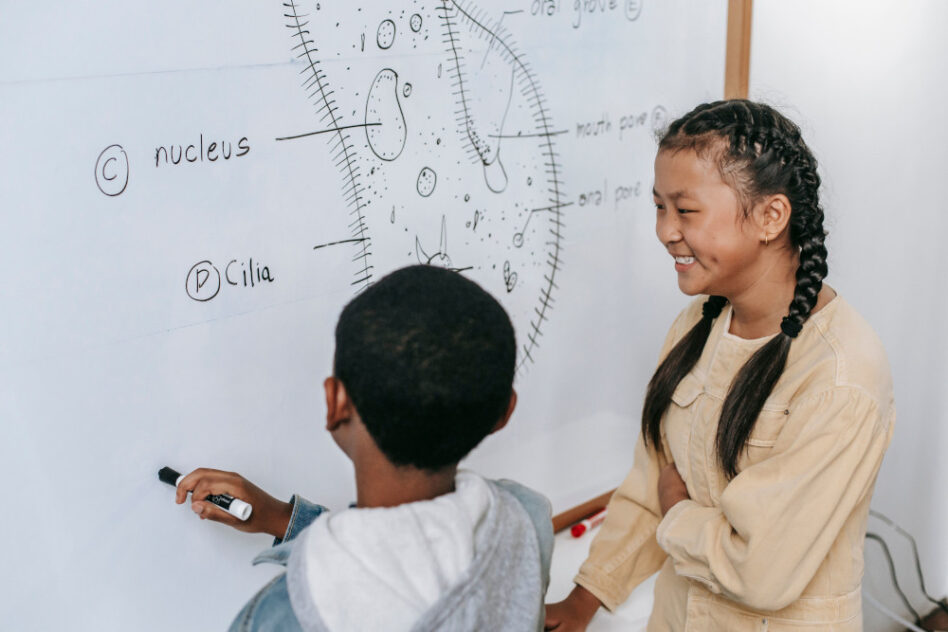
Interactive demonstrations, storytelling, digital platforms and conversations with researchers can make scientific concepts more approachable.
More importantly, they encourage students to ask questions, test ideas and recognise that curiosity drives exploration.
In a nutshell, making science relatable and engaging helps create an environment where curiosity flourishes, and interest awakens.
The future belongs to science we can share
The meeting of Jane Austen and Albert Einstein may be imaginary, but its message is relevant.
Austen reminds us to question our assumptions about others, while Einstein’s association with explaining complex ideas simply highlights the importance of comprehensibility.
Together, they offer a compelling lesson in which scientific excellence must be accompanied by the ability to communicate its value.
The responsibility extends beyond researchers. Educators, institutions, policymakers and communities all have a role in creating opportunities for meaningful dialogue and participation.
Ultimately, research should be valued not only for publications, patents or laboratory breakthroughs, but also for how it informs decisions, improves lives and inspires future generations.
Perhaps the real art of science communication lies in bridging the distance between scientific pride and public understanding.
When researchers communicate without prejudice and audiences engage without intimidation, science becomes more than a specialised body of knowledge.
It becomes a conversation in which everyone has an opportunity to learn, question and contribute. —Oct 20, 2026
Main image: Pexel
The post What Austen and Einstein can teach us about sharing meaningful science first appeared on Focus Malaysia .
Why it is new
- No engagement data available from these sources; score uses mention signals only
Attention graph
Timeline
- DetectedFirst detected (Focus Malaysia) source
Where it started
How it spread
- Step 1NewsFocus Malaysia22:21
Internet reaction
- What Austen and Einstein can teach us about sharing meaningful scienceu/Ts. ChM Dr. Kumuthini Chandrasekaram · Focus Malaysia · 22:21 · EN
What we know
- Nothing independently established yet.
What we don’t know
- No established news outlet has reported this yet; details come from social or community posts
- Independent confirmation is missing; treat specifics as unverified
- Only one source so far
All sources (1)
Attention is measured from these mentions only. Platforms shown: News. We never invent signals for platforms we do not ingest.
Follow for your feed
Follow the topic or the people and places in this story and they shape your For you page. Kept in this browser only.