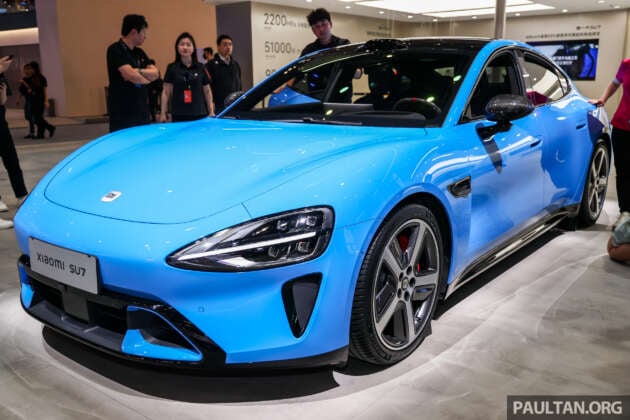
China proposes stricter car design, testing rules, including ban on fully hidden door handles
Reported by two or more established outlets, or an official source.
What happened
China proposes stricter car design, testing rules, including ban on fully hidden door handles (Google News Malaysia (EN), 12:25)
Read the reporting
1 reportChina drafts new rules for cars: folding screens banned, zero-gravity seats locked in motion, year-long tests
China is drafting tougher rules on how cars are designed and tested before they go on sale. The draft bans foldable and flexible screens, and requires zero-gravity seats, swivel seats and pop-up roofs to be locked out while the car is moving.
It also stops passengers from using voice commands to operate the headlights, wipers, doors or bonnet. Before a new model can be approved, carmakers would need to complete at least 30,000 km of reliability testing and a full year of hot and cold weather testing.
The draft notice was published on October 10, 2026 by the ministry of industry and information technology (MIIT). It was drawn up together with the ministry of public security, the ministry of ecology and environment and the State Administration for Market Regulation (SAMR).
It is open for public comment until November 10, 2026. Feedback is sent by email to the MIIT using a form attached to the notice.
Why China is doing this
The draft says China’s car industry has been innovating quickly, with new technology reaching cars and models being updated faster than before. This has given buyers more choice and improved what cars can do.
However, it says some carmakers have been following trends and rushing out new products without testing them properly. This has raised safety and environmental risks.
The aim is to stop designs with safety hazards, and cars that have not been fully tested, from reaching the market.
The notice is based on China’s Product Quality Law, Ecological Environment Code, certification and accreditation regulations, MIIT Order No. 50, which governs the approval of vehicle manufacturers and their products, and the MIIT’s review requirements for vehicle approval.
It follows several earlier moves. China has already banned hidden door handles and yoke steering wheels from January 1, 2027, and made physical controls mandatory for key functions . In August, SAMR recalled 4.3 million cars over hidden door handles .
Key dates
January 1, 2027: new models with innovative designs, or that need R&D testing, must declare extra technical details and submit test evidence when applying for approval
July 1, 2027: models already approved that use innovative designs must submit the same details and evidence
Approval here means a listing in the MIIT’s Announcement, the official catalogue of vehicles that can be made and sold in China. The extra details become part of the MIIT’s approval and production conformity checks.
Models that were not tested according to the new guidelines, were not tested enough or come with false evidence will not be approved.
For models already on sale, those that still have not submitted the details and evidence after July 1, 2027, and that have safety hazards, must stop production immediately. The carmaker must file a recall plan with SAMR and recall the cars.
Technical service bodies must also stop accepting certificate of conformity information for those models. Where a national standard already sets a transition period for production and sales, that standard applies instead.
Under the Ecological Environment Code, test information must be made public and reported to the environmental authorities.
The new design rules
The design rules are set out in an attached guide called the Technical Guidelines for Automotive Product Innovative Design. Each design must still meet the relevant national standards, with the guide adding extra checks on top.
Door handles and doors
Fully hidden door handles are banned. Door handles must meet the GB 48001 door handle safety standard, and must be shown to work in extreme environments and to be usable in an emergency. They need a mechanical backup and enough space for a hand.
Doors that pull themselves shut electrically (soft-close doors) must have anti-pinch protection. Their reliability, anti-pinch safety and emergency release must be assessed, and they must open manually if the power fails or there is a fault.
Cars with doors made of non-metal materials must meet the GB 20071 side impact standard and pass reliability and durability tests on the doors.
Physical buttons and touch controls
Touch and pressure-sensitive controls that replace physical buttons must be assessed for touch reliability, protection against accidental presses and how clear their feedback is. They must meet the GB 7258 vehicle safety and GB 4094 control symbol standards.
Key safety functions such as the lights, wipers and demister/defroster can use touch controls only if they also have physical controls. Their ease of use, reliability and safety must be assessed across all driving situations.
Emergency escape devices, the emergency brake and the switch that cuts power to the drive system must all be physical controls with clear markings.
Screens and head-up displays
Foldable and flexible displays are not allowed.
Infotainment screens, large displays and complex head-up displays must meet the GB 7258 and GB 11562 (driver’s forward view) standards. Carmakers must also assess how the information shown affects driving safety, how reliable the screens are in extreme environments and how safe they are in a crash.
Voice and gesture controls
Voice, gesture and other new ways of controlling the car must be assessed for reliability. This covers visual coordination, how sensible the operation is, convenience, how easy information is to read, completeness of functions and safety.
While the car is moving, anyone other than the driver must not be able to directly operate the demister/defroster, headlights, wipers, doors or bonnet by voice or other new control methods.
Seats and pop-up roofs
Zero-gravity seats and other seats that recline to a large angle, swivel seats and seats that fold flat into a bed must meet the GB 15083 seat strength standard. They must also be assessed for anti-pinch safety, crash safety, how reliably the adjusters lock and whether they could accidentally press other controls.
Carmakers must use technical means to restrict when these seat functions can be used. They cannot be used while the car is being driven.
Pop-up roof cabins must meet the GB 26134 roof crush standard. They must be assessed for anti-pinch safety, crash safety and wind resistance, along with any hazards in how they are used. Like the seats, they must be locked out while the car is moving.
Steering wheels
Cars with non-round steering wheels must meet the GB 7258 and GB 17675 steering system standards. The wheel must also be fully assessed for how easily and safely the driver can use it.
Lights and bumpers
One-piece lamps, lamps that stick out from the body, and exterior “light language” (lights that display messages or patterns) must meet the GB 7258 and GB 4785 lighting installation standards. Carmakers must assess their effect on the safety of other road users, and how expensive they are to repair. They must also review what the light displays show.
Unconventional bumper designs must be assessed for active and passive safety, material reliability and repair costs. Examples given include tow hook mounting holes on the bumper, lamps that stick out past the bumper, and bumpers that double as the air suspension’s air tank.
Mirrors and air suspension
Cars with only camera-based mirrors must meet the GB 15084 indirect vision standard. Carmakers must also assess the effect on safety when mud or water blocks the cameras.
Air suspension must meet GB 7258 and be fully tested for reliability under heavy loads, over long distances and on difficult roads. It must also be shown to work normally in extreme heat and cold.
Acceleration and regenerative braking
Cars that can do 0-100 km/h in under five seconds must meet GB 7258. Carmakers must also assess how well drivers adapt to that acceleration in different situations, and any safety hazards that come with it. China’s ministry of public security proposed limiting 0-100 km/h to no quicker than five seconds by default last year.
Cars that slow down with regenerative braking when the driver lifts off the accelerator must also meet GB 7258. Carmakers must assess how well drivers adapt to this, and what protects against the driver pressing the accelerator by mistake.
Driver assistance and autonomous driving
Cars with driver assistance or autonomous driving must meet GB 47955 (safety requirements for combined driver assistance systems) and GB 44721 ( safety requirements for autonomous driving systems ).
Carmakers also need the ability to develop and test these systems properly. They must provide for functional safety, safety of the intended functionality, cybersecurity, data security, software updates and safety monitoring.
The systems must be fully tested on real cars in the situations they are designed for. Their limits and safety responses must be clearly defined, control strategies must be reasonable and owners must be told about them. Safety must be managed properly through development, production and use.
Trucks, emissions and methanol
New energy trucks whose load space does not match their rated payload, such as N3 class tipper trucks with a payload utilisation ratio below 0.4, must be assessed for the risk of overloading and exceeding legal limits. The same applies to tankers with an unreasonable vehicle and tank design.
Heavy vehicles with ultra-low precious metal catalytic converters must show that their exhaust after-treatment keeps emissions within the GB 17691-2018 China 6 limits as it ages, over the vehicle’s whole durability mileage.
Heavy vehicles with catalytic converters coated in precious metals other than platinum, rhodium and palladium must be tested for emissions of precious metal compounds and other toxic substances over their durability mileage. They must not add new toxic emissions.
Light and heavy vehicles with methanol engines must be tested for methanol, formaldehyde and other special pollutants, and stay within limits over their durability mileage. The relevant standards are GB 18352.6-2016 (light vehicles, China 6) and GB 17691-2018 (heavy vehicles).
Other new designs
Any other innovative design not covered must be fully assessed for safety, stability, driving safety, occupant protection, road safety and ease of use. This includes any situations where it could create safety hazards or emission risks.
How designs must be tested
The guide also sets general rules for testing these designs:
Carmakers must fully record test data and results, covering functional safety, safety of the intended functionality, cybersecurity, data security and emissions
Test evidence can come from a qualified testing body or the carmaker’s own lab, with a commitment that it is genuine. Reports for mandatory national standards must come from a qualified testing body
Risk assessment must happen early, during design, with failure analysis under complex conditions and extreme situations. Designs that fail cannot be fitted to cars
Where there is no national or industry standard, a design must still meet requirements for health and the safety of people and property
Testing must include real-car tests at the very least, plus simulations and bench tests where needed, with traceable data
Minimum testing before a car can be approved
A second attached document, the Technical Specification for Automotive Product R&D Testing and Validation, sets out what testing must be done before a car can be approved. It applies to passenger cars, while trucks and buses use it as a reference.
The principles are safety first, full validation and carmaker responsibility. The carmaker is primarily responsible for testing, and is legally liable for the results being genuine and complete.
Among the requirements:
Carmakers must set up a proper management system for R&D testing
A testing plan must be drawn up once development targets are set, listing the tests, methods, standards, deadlines and who is responsible
The plan is submitted with the application for approval, and a carmaker cannot appl
Why it is new
- 3 independent sources, 1 new in the last hour
- No engagement data available from these sources; score uses mention signals only
Attention graph
Timeline
Where it started
How it spread
- Step 1News outletsGoogle News Malaysia (EN)12:25
- Step 2NewsPaul Tan's Automotive News10:26 · +1321 min
Internet reaction
- China drafts new rules for cars: folding screens banned, zero-gravity seats locked in motion, year-long testsu/Harvinder Sidhu · Paul Tan's Automotive News · 10:26 · EN
What we know
- Covered by 2 established outlet(s): Google News Malaysia (EN)
What we don’t know
- No open questions flagged by the rules.
All sources (3)
Attention is measured from these mentions only. Platforms shown: News. We never invent signals for platforms we do not ingest.
Follow for your feed
Follow the topic or the people and places in this story and they shape your For you page. Kept in this browser only.