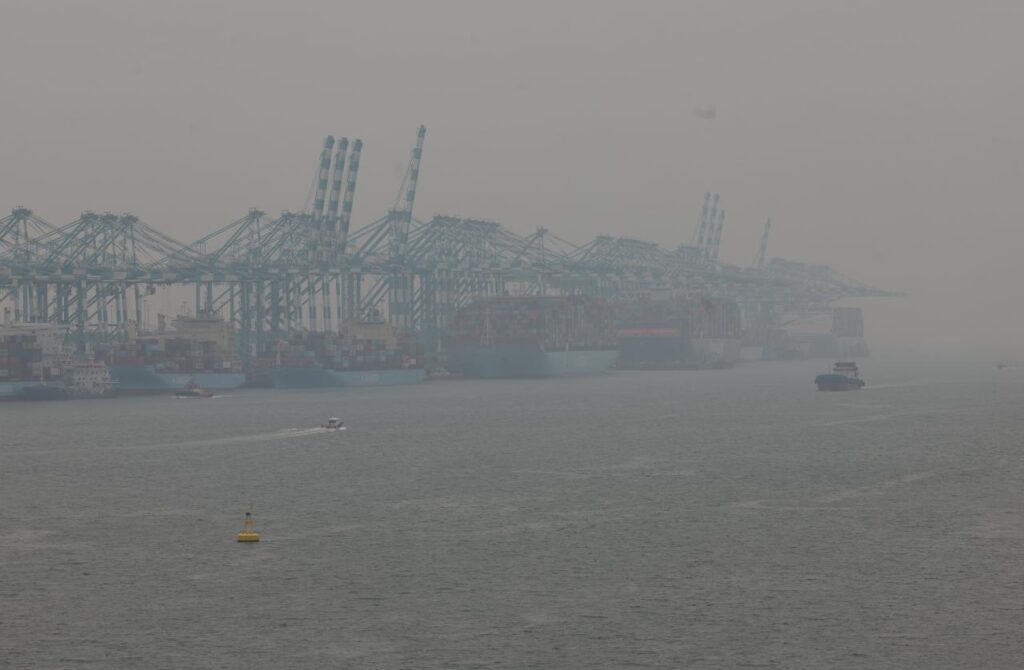
Glossy Sustainability reports, choking skies: plantation giants must answer – Ravindran Raman Kutty
Only social or community posts, or a single source.
What happened
Details are being gathered from the sources below.
Read the reporting
1 reportGlossy Sustainability reports, choking skies: plantation giants must answer – Ravindran Raman Kutty
Malaysia must investigate companies linked to Indonesian fires and test whether their sustainability promises survive scrutiny beyond our borders.
A sustainability report cannot clear the air. A zero burning pledge cannot substitute for fire prevention. And a Malaysian plantation group should not escape scrutiny merely because the operations under question sit across the border.
The haze demands more than another diplomatic exchange with Indonesia. It demands an examination of corporate ownership, plantation management and the environmental commitments companies present to shareholders and the public.
On Oct 7, Greenpeace Malaysia took its demands for stronger corporate accountability to Parliament. Its memorandum sought action following findings identifying 20 companies and corporate actors associated with smoke sources and areas affected by Indonesian fires.
The government must now demonstrate that receiving a memorandum means more than acknowledging a complaint.
Name the companies. Establish the responsibility.
Greenpeace Indonesia, Greenpeace Malaysia and Pantau Gambut identified Kuala Lumpur Kepong Bhd (KLK), through its connection to PT Menteng Jaya Sawit Perdana, among the entities associated with their 2026 findings. The analysis used haze source data dated Oct 1. Greenpeace said the same entity appeared in its 2019 reporting.
That is sufficient reason for scrutiny. It is not, by itself, proof that KLK or its subsidiary deliberately ignited a fire.
This distinction matters. Identifying a fire within or near a concession raises questions about ignition, prevention, management and containment. Those questions require evidence, not assumptions.
KLK says the majority of fires originated outside the concession. It says its subsidiary practises zero burning and undertakes no replanting activities. The company also says it implemented fire prevention and control measures.
Those statements must be included fairly. They must also be independently examined.
Where did the fires start? How did they spread? Were preventive measures adequate? What equipment and personnel were available? What did management know?
Neither an allegation nor a corporate explanation should replace an investigation.
Put the sustainability promises under scrutiny
KLK’s Sustainability Report 2025 provides a relevant starting point. Covering the financial year ended Sept 30, 2025, it addresses the group’s palm related businesses and subsidiaries, including disclosures concerning emissions, water, wastewater, conservation, hotspots and fire incidents.
The report predates the current allegations. It cannot prove responsibility for events in 2026. It can, however, establish what the company said about its systems and environmental performance.
Its sustainability policy, dated May 30, 2025, extends to plantation and manufacturing operations, including subsidiaries, joint ventures and entities under management control, where applicable.
The commitments include no open burning, peatland protection, fire preparedness, biodiversity conservation and water quality monitoring. The policy also addresses support for fire safety measures in neighbouring communities where relevant and feasible.
Promising promises.
Now show the implementation.
Investigators should compare those commitments with concession boundaries, incident records, firefighting resources, peatland management documents, environmental assessments and audit findings.
They should distinguish written procedures from operational capacity, and reported compliance from verified performance.
If evidence establishes that reassuring disclosures misrepresented actual practices or concealed material failures, greenwashing would be an appropriate description.
But that conclusion must follow the evidence. An article cannot turn disputed allegations into established guilt.
Accountability must cross the border
Malaysia must stop treating the issue solely as a complaint against Indonesia.
Indonesia has responsibilities.
Malaysian businesses operating there have responsibilities too.
On Oct 9, the plantation and commodities ministry said it would examine stronger cooperation with Indonesia, potentially through the Council of Palm Oil Producing Countries, including information sharing and fire prevention and control.
The ministry also acknowledged KLK’s explanation concerning PT Menteng Jaya Sawit Perdana.
Acknowledgement is not verification. Cooperation is not a substitute for accountability.
The government should publish the scope of its inquiry, identify the evidence sought and set a timetable for findings.
Malaysian authorities should work with Indonesian counterparts while establishing what can lawfully be investigated concerning parent company oversight and corporate disclosures.
Where evidence establishes an offence or actionable breach, authorities should pursue prosecution or civil remedies under applicable law.
Where jurisdictional gaps obstruct effective action, Parliament should address them.
A sustainability report is not automatically a legal undertaking whose breach guarantees prosecution. Investigators must establish the relevant duty, responsible entity, breach and harm.
That legal discipline should strengthen enforcement, not become an excuse for doing nothing.
People belong in the ecosystem
The argument cannot end with whoever struck a match.
Greenpeace and Pantau Gambut place recurring fires within wider questions of peatland governance, ecosystem degradation and corporate accountability.
Investigators should distinguish deliberate burning, accidental spread and failures of prevention. Smallholders must not become convenient scapegoats. Corporate size must not become a shield.
Malaysia should also resist dismissing every European environmental concern as hostility towards palm oil.
The EU’s deforestation regulation covers palm oil alongside cattle, cocoa, coffee, rubber, soy and wood. It addresses deforestation and legal production across those commodities.
That does not validate every criticism of palm oil. It makes blanket dismissal inadequate.
The ecosystem includes people as well as wildlife, forests and waterways.
Environmental responsibility cannot stop at a reporting boundary.
Sustainability reports should therefore become documents companies must substantiate, not ornaments of corporate reputation.
Genuine commitments should withstand independent scrutiny. Misleading claims should face appropriate consequences.
Malaysia must ask not merely where the smoke originates, but who had the duty and capacity to prevent it, what they actually did, and whether their public promises matched their conduct. October 13, 2026. - October 13, 2026
Ravindran Raman Kutty is an award-winning PR practitioner
The post Glossy Sustainability reports, choking skies: plantation giants must answer – Ravindran Raman Kutty appeared first on Scoop .
Why it is new
Not enough measurements yet to explain the score. Explanations are generated only from stored data.
Attention graph
Not enough history in this window yet. The engine measures every five minutes.
Timeline
No timeline yet.
Where it started
Unknown.
How it spread
Not enough data to show how this spread.
Internet reaction
What we know
- Nothing independently established yet.
What we don’t know
- No open questions flagged by the rules.
All sources (1)
Attention is measured from these mentions only. Platforms shown: News. We never invent signals for platforms we do not ingest.
Follow for your feed
Follow the topic or the people and places in this story and they shape your For you page. Kept in this browser only.