How Malaysia can raise its retirement age from 60 to 65: Experts explain the math and more
Only social or community posts, or a single source.
What happened
KUALA LUMPUR, Oct 15 — Should Malaysia push its retirement age up from 60 to 65, and if yes, how can it be done? (Malay Mail, 07:00)
Read the reporting
1 reportHow Malaysia can raise its retirement age from 60 to 65: Experts explain the math and more
KUALA LUMPUR, Oct 15 — Should Malaysia push its retirement age up from 60 to 65, and if yes, how can it be done?
Currently, Malaysia’s minimum retirement age of 60 means private sector employees are protected from premature retirement before 60, while civil servants have a mandatory retirement age of 60.
However, global pension expert William Price said Malaysia needs to gradually increase its retirement age to at least 65 as Malaysians are living longer.
He said “it’s very strange that Malaysia’s retirement age has been so low for so long” when many other countries had increased theirs.
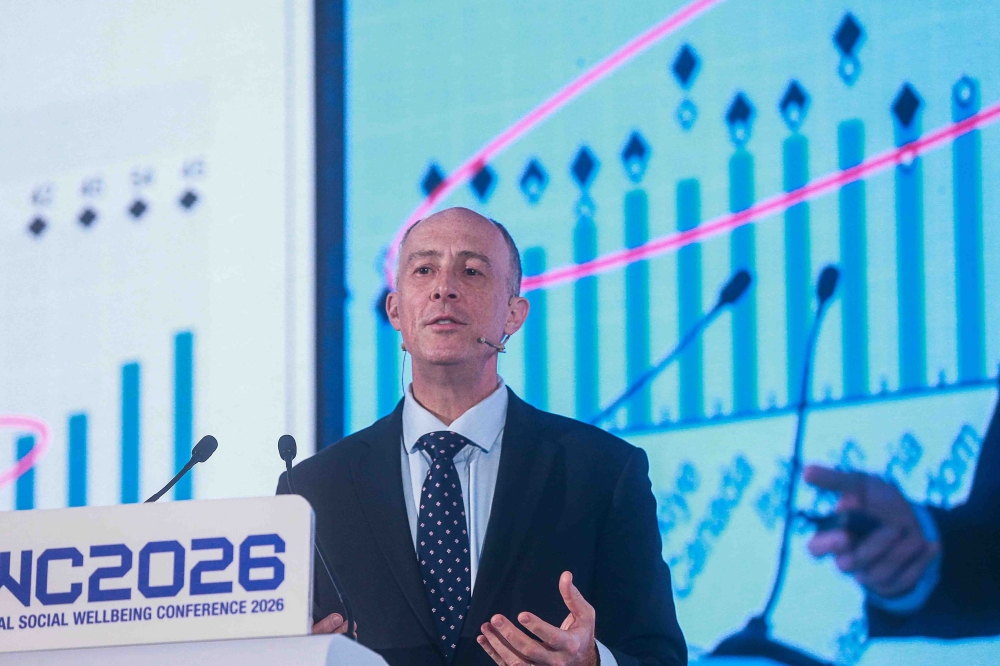
“Usually some countries do it in a crisis period where suddenly they have to increase it very rapidly and that’s tough,” he told Malay Mail at the sidelines of the Employees Provident Fund’s (EPF) International Social Wellbeing Conference (ISWC) 2026.
He explained that people may find it psychologically difficult to accept if the retirement age is suddenly raised, such as when a 59-year-old person thought they were one year away from retirement, but are suddenly told they have to work six years more before retiring at 65.
“But also it’s just difficult for you in terms of your life and employer, you might not have prepared for it,” the CEO of consultancy firm D3P Global Pension Consulting said.
“So countries have a gradual way, which I think Malaysia should follow, and you just say from now on each year is going to work three months longer,” he said.
How will the maths work?
Price explained how the gradual shift to the right direction of eventually hitting 65 can work, where three months are added for each of the remaining years that a worker will be working.
So if you announce that the retirement age will be 65 from 2040, anyone currently working who is below the age of 40 will retire at 65.
“But there’s a transitional period so it goes 60, 60 and 3 months, 60 and 6 months, 60 and 9 months, 61 so it’s gradually going year by year,” he said.
For example, a 40-year-old would have 20 years’ time to prepare and adjust to the idea of working five more years to retire at 65, instead of 60.
On the flip side, those nearer to the initial retirement age of 60 would not suddenly have to adjust to the idea of working until 65.
“If you’re currently 50, you’re going to retire at 62 and a half. If you’re currently 55, you’re going to retire at 61 and a bit,” he said.
For someone aged 59, they would just have to accept that they will be working three months longer, and would retire at 60 years and three months.
“So, the closer you are, the smaller the change; the further away, then you get time to put the whole change in,” he added.
Apart from being psychologically easier to accept, he said: “It’s easier for the labour market to adjust so that employers are used to hiring workers who are staying longer or who are older. And most countries try to do this, some sort of gradual phasing in of the change in retirement age.”
Price said this gradual method is less politically divisive as people would just be retiring months apart from each other, instead of there being two different groups with very different experiences of retiring at 60 and 65 respectively.
“And it’s the dominant model that countries do around the world, work out how late people need to retire, work out a pathway to adjust towards it over time gradually,” he said.
If the retirement age is increased to 65, he said it could come with caveats, where those who started working at a younger age (such as age 16) can retire earlier at around age 60, as compared to those who went to university first and started working later (such as age 26).
“So you usually have a rule where the retirement age is ‘X’ but after you’ve done say 40 years or 45 years you can retire. So that maybe it’s possible to retire a bit earlier for the people who started work for longer,” he said.
“Because often the people who work from age 16, it’s often people who are from less wealthy backgrounds, in lower-paid jobs, sometimes more physically-demanding jobs. So it makes sense … basically they’ve more than done enough years of contributions, so they should be able to retire a bit early,” he said.
Linking the retirement age to life expectancy
After increasing to 65, Price said Malaysia could ideally adopt what some countries do, which is to link retirement age to the Department of Statistics Malaysia’s (DOSM) life expectancy figures.
“And so if people are not living that much longer, then you don’t change your retirement age. If they are living that much longer, then you do,” he said when explaining that the retirement age could be further increased or stay the same depending on whether life expectancy rises.
Based on the latest DOSM figures released September 30, life expectancy for a baby born in Malaysia in 2026 has increased to 75.5, while those aged 60 now are expected to live 20.2 years more (age 80.2) and those aged 65 now are expected to live 16.5 years more (age 81.5).
Linking the retirement age to access to retirement funds, with built-in flexibilities
Price said most people would not have sufficient income until they die, saying: “So they need to work longer, they need to save longer, and they need to take their money later.”
To make this work, Price also proposed linking the gradual increase in retirement age to a similar gradual increase of the age to access retirement savings, using a similar transition method.
He said it would be psychologically and politically difficult if those expecting to access their retirement funds at 55 were suddenly told they could only access it at 65.
Instead, workers who are 20 years away from retiring could have the age they access their retirement savings increased to 65, which would match the new retirement age.
At the same time, he said there could still be some flexibility, where those who have saved more in their EPF could be granted “early access” to the extra amount beyond the basic savings level. He said this could be an incentive to encourage people to save more.
The EPF’s guide for what Malaysians can target to save up by retirement has three levels to aim for, currently: basic savings at (RM390,000), adequate savings (RM650,000) and enhanced savings (RM1.3 million).
An older person may work differently than in their youth
During an ISWC 2026 panel session, Price noted some may mistakenly fear that a higher retirement age would mean older people do not leave their jobs and that it would lead to higher youth unemployment rates.
But he described this as the “lump of labour fallacy”, which refers to the mistaken belief that there is only a fixed number of jobs available.
“The evidence suggests, good labour markets which have the ability for employers to offer jobs, show the opposite,” he said, adding that raising the retirement age could be done without increasing unemployment for those in their 20s and 30s.
Price said the biggest benefit of working longer would be to fund retirement, as it would mean more years of not needing to tap or rely solely on one’s retirement savings.
He said older persons may not necessarily continue working full time or the same jobs until they hit age 65; and that where and how they work and the number of working hours or days could change.
“But if you’re working three days a week when you’re 62 to [63, 64, 65], drawing down a little bit of your assets, that gives you enough income. That means that you’re not wiping out everything in that first 10 years or so,” he said in his ISWC presentation.
Licensed financial planner Rajen Devadason said political will is required for Malaysia to increase its retirement age. — Sayuti Zainudin
Raise it to 65 by 2030, 70 by 2050
Licensed financial planner Rajen Devadason said it is time for Malaysia to gradually move up its current retirement age of 60, which he feels is “too low”, and said this will require political will as it can be politically unpalatable.
“I think that Malaysia’s retirement age should be shifted up, obviously in stages, to 65 by the year 2035, and to 70 by the year 2050,” he told Malay Mail in an interview at the ISWC 2026.
In his hypothetical example, Rajen said the retirement age could be increased by one year every two years (or in other words, by one month every two months).
While saying that a mandatory higher retirement age would “work better”, Rajen said people would be more willing to accept the change if they are given an option on whether to retire later.
Higher retirement ages won’t deprive younger workers of jobs
Rajen acknowledged resistance by some against higher retirement ages: “A lot of people get very upset. They say, ‘If you are older and you work longer, you will then be depriving younger people of jobs.’ I don’t think that’s true.”
“Because you think about it. By the time someone is 55, 60, and then if he or she keeps working till 65, 70, etc., the jobs that that particular individual is doing would be very, very different from the jobs that younger people entering the workforce would be doing.
“So, what is required is economic growth and the ability to actually create enough jobs,” he said.
“But it’s going to be a tough journey, because not just in Malaysia, in every country, people resist being told that you are required to retire later. People resent it,” he said.
But for those who might not want to retire later even if they have the option to do so, Rajen indicated the reality — especially for private sector employees — would be running out of funds during retirement: “You don’t want to work, don’t work. You’ll just run out of money.”
At ISWC 2026, Rajen had also pointed out that people are increasingly living longer, such as his oldest client who died at 103, Tun Dr Hasmah Mohamad Ali at 100, and his own mother at over 94.
“Our legislation is caught in a time warp. And the set retirement age at 60 is irrationally low in my opinion. And if you retire at 60 and the average lifespan is 75, you assume, okay, you’ve only got 15 years to go.
“But the trouble with averages is that they actually hide half, half the people who live longer,” he said, when explaining that living longer also meant planning to ensure sufficient income in the remaining years.
Rajen said Malaysians would need to have the right skills required by an evolving global marketplace in order to work longer and work remotely here, saying that they could start preparing from young by mastering languages such as English, Mandarin and Spanish as well as focusing on Science, Technology, Engineering and Mathematics (STEM) courses.
International Labour Organisation (ILO) Senior Social Protection Specialist for South Asia Mariko Ouchi suggested a flexible range for retirement ages, as some may want to work longer while some have to retire earlier. — Picture by Sayuti Zainudin
Working longer gives meaning too, but some may have to retire earlier
International Labour Organisation (ILO) Senior Social Protection Specialist for South Asia Mariko Ouchi said one solution could be allowing flexibility in the retirement age, saying for example that it could be fixed at a range of age 60 to 65.
Ouchi said some people may want to work longer as the income from employment is usually higher than from pensions or old-age benefits, and that those who are healthy may want to continue working for reasons beyond money and as work has meaning for them.
As for those who have health concerns or have to take care of older parents or other family responsibilities, she said they could still retire at 60 but possibly receive less old-age benefits compared to those who work longer and continue contributing more years.
“So, you know, like for those who agree for the later retirement, keep some options for them to retire a little bit later,” she said during an ISWC 2026 panel session, adding that the retirement age could be increased gradually such as by three months or six months per year.
ILO Regional Social Protection Specialist for South-East Asia and the Pacific André Gama (firs
Why it is new
- No engagement data available from these sources; score uses mention signals only
Attention graph
Timeline
- DetectedFirst detected (Malay Mail) source
Where it started
How it spread
- Step 1News outletsMalay Mail07:00
Internet reaction
No social or community posts about this yet from the platforms we ingest.
What we know
- Covered by 1 established outlet(s): Malay Mail
What we don’t know
- Independent confirmation is missing; treat specifics as unverified
- Only one source so far
All sources (1)
Attention is measured from these mentions only. Platforms shown: News. We never invent signals for platforms we do not ingest.
Follow for your feed
Follow the topic or the people and places in this story and they shape your For you page. Kept in this browser only.