World Mental Health Day: Little Eyes, Lasting Lessons
Only social or community posts, or a single source.
What happened
“Sometimes, it is not about regulating emotions perfectly, it is also about showing children what repair looks like when we don’t get it right.” — Kimberley Tan (Sarawak Tribune, 17:58)
Read the reporting
1 reportWorld Mental Health Day: Little Eyes, Lasting Lessons
“Sometimes, it is not about regulating emotions perfectly, it is also about showing children what repair looks like when we don’t get it right.” — Kimberley Tan
Growing up emotionally healthy
In conjunction with World Mental Health Day, a closer look at childhood reminds us that mental well-being begins early, shaped by the environments, relationships and emotions children experience.
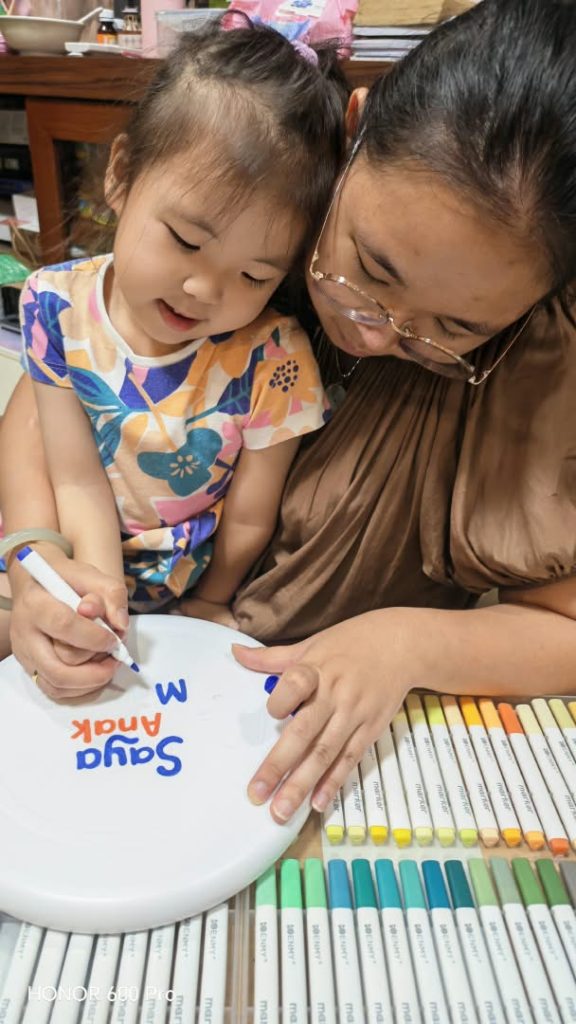
There is an old saying: “Monkey see, monkey do.” For children, it carries more truth than humour. Rather than learning only from lessons adults deliberately teach them, children are shaped by what they observe around them.
Lessons come from the way parents speak, the way teachers behave, how adults treat others, and even what society chooses to celebrate or ignore.
This is why conversations about emotions and mental well-being should begin much earlier than many parents realise — even before a child can speak. Speaking in conjunction with World Mental Health Day, play therapist trainee Kimberley Tan stressed the importance of understanding the emotions underlying children’s behaviour.
Lessons come from the way parents speak, the way teachers behave, how adults treat others, and even what society chooses to celebrate or ignore.
“Children see how we respond when we’re stressed, how we calm ourselves down, how we handle disappointment and how we react when things don’t go our way. So in many ways, we teach emotional regulation through our own behaviour before we ever teach it through words,” she said.
When children begin speaking, they also learn to put their experiences into words. Even something as basic as “I’m hungry” is a child communicating a physical need. “From there, we can build their vocabulary around emotions, needs and experiences.”
A child acting out
As children grow, however, not everything they are trying to communicate can be expressed in words. Sometimes, it comes through a tantrum. Sometimes, a child may refuse to go to school, become unusually quiet, withdraw from others or suddenly become more irritable.
These behaviours are often quickly labelled as “naughty”, particularly when they disrupt the adults around them. But Tan said parents should pause before assuming that the behaviour itself is the problem.
“Sometimes, almost anything adults label as ‘naughty’ can be a child communicating that something is going on underneath. Talking back, withdrawing or isolating themselves, truancy, school refusal, temper tantrums, throwing things, becoming unusually quiet or suddenly becoming more irritable — these can all be signs that something is happening beneath the surface,” she said.
Rather than immediately asking how to stop the behaviour, she encouraged adults to ask a different question: “What is this child trying to tell me through this behaviour?”
Naturally, children will have tantrums, become upset, test boundaries and have difficult days. What deserves closer attention, Tan said, is a noticeable change from a child’s usual behaviour, particularly when it persists or begins to affect school, friendships, family relationships, sleep, eating habits or daily functioning.
When children begin speaking, they also learn to put their experiences into words.
“Parents know their children best, so sometimes that first feeling of, ‘This isn’t quite like them,’ is worth paying attention to,” she added.
When children act out, adults are often compelled to comfort them by saying, “Stop crying” or “Don’t be dramatic”. According to Tan, such remarks may eventually teach children that their emotions are inconvenient, burdensome or unacceptable.
“They may begin to believe that difficult emotions are something they need to hide, while positive emotions are the only ones that are acceptable to share. Some children may then withdraw from social situations, put on a ‘happy’ face even when they aren’t feeling that way, or seek out environments where they feel their emotions will be accepted.”
Instead of saying, “Stop crying”, Tan suggested first acknowledging what the child is experiencing: “I can see you’re really upset. Let’s work out what happened.”
Learning to regulate, not suppress
Tan emphasised that healthy emotional regulation does not mean raising a child who never cries, gets angry or throws a tantrum. As a play therapist trainee, she said all emotions are valid and serve as a form of communication.
The goal, therefore, is not to eliminate difficult emotions, but to help children gradually develop safer and more effective ways of experiencing and expressing them.
“A child can be angry and still be safe. They can be disappointed and still recover,” said the co-founder of Kinder Minds Therapy centre.
Are we giving children enough room to simply be children?
In other words, an emotionally healthy child is not necessarily the quietest or most obedient child in the room. They may still cry when they lose a game, become frustrated when they cannot have what they want or feel angry when something seems unfair.
What matters is their ability, with time and support, to regain their composure and continue with what they were doing. This is where the adults around them play an important role.
“Children, like adults, have different ways of coping. Some adults go for a run when they’re stressed, while others need to sit quietly by themselves. Children are no different.”
Tan explained that children’s responses are shaped by their temperament, experiences, relationships and what they have observed or been taught about handling difficult emotions.
By way of example, she said one child might express distress through anger or disruptive behaviour, while another might become quiet or withdraw.
“Neither automatically means one child is coping better than the other.”
Children, after all, do not learn emotional regulation in isolation. They observe how the people they trust deal with frustration, conflict, disappointment and stress — and those observations can become their own reference point for navigating difficult emotions.
Monkey see, monkey do
While helping children regulate their emotions and learn to cope with difficult feelings is important, adults must also recognise that they are not perfect. Parents are human, too, and losing their patience does not make them bad parents.
What matters most, Tan explained, is what happens afterwards.
“Children are also watching how adults come back to their baseline. If we lose our temper, we can model accountability by acknowledging it, calming ourselves down and repairing the relationship.”
what adults see as disruption may sometimes be a child’s way of communicating that something is not right.
Sometimes, it is not about regulating emotions perfectly, but also about showing children what repair looks like when we get things wrong.
At school, meanwhile, teachers are often in a unique position to notice changes in a child’s behaviour because they see pupils regularly and in an environment different from their home life. A child who was once engaged may suddenly become withdrawn, while another who was generally calm may begin acting out or struggling to participate.
Tan said schools can play an important role in recognising these changes, creating an environment where seeking help is normalised and referring children to appropriate professionals when further support is needed.
“The goal isn’t for teachers to become therapists. It’s about making sure that when a child is struggling, there is a pathway to help rather than simply a punishment for the behaviour,” she added.
After all, what adults see as disruption may sometimes be a child’s way of communicating that something is not right.
Perhaps, then, the measure of a child’s well-being should not be how quietly they sit in a classroom, how well they perform in examinations or how rarely they trouble the adults around them. Childhood is also a time to make mistakes, ask questions, disagree, feel disappointed and slowly discover who they are.
Children’s responses are shaped by their temperament, experiences, relationships and what they have observed.
Tan believes children need the space to develop self-esteem that is not entirely dependent on approval, as well as the confidence to try, fail, learn and try again.
A mentally healthy childhood, she said, is one in which children can build relationships, develop independence, understand what matters to them and know that their worth is not determined by their performance.
In a world that often measures children by grades, achievements and good behaviour, perhaps there is value in asking a different question: Are we giving children enough room to simply be children?
After all, growing up is not about learning how to be perfect. It is about learning how to live with oneself, with others and with the many emotions that come with being human.
Why it is new
- No engagement data available from these sources; score uses mention signals only
Attention graph
Timeline
- DetectedFirst detected (Sarawak Tribune) source
Where it started
How it spread
- Step 1News outletsSarawak Tribune17:58
Internet reaction
No social or community posts about this yet from the platforms we ingest.
What we know
- Covered by 1 established outlet(s): Sarawak Tribune
What we don’t know
- Independent confirmation is missing; treat specifics as unverified
- Only one source so far
All sources (1)
Attention is measured from these mentions only. Platforms shown: News. We never invent signals for platforms we do not ingest.
Follow for your feed
Follow the topic or the people and places in this story and they shape your For you page. Kept in this browser only.