Medical protection depends on coverage’s affordability
Only social or community posts, or a single source.
What happened
KUCHING: Unchecked medical inflation could raise MediAsas premiums, reduce coverage limits or tighten eligibility. (Sarawak Tribune, 09:22)
Read the reporting
1 reportMedical protection depends on coverage’s affordability
KUCHING: Unchecked medical inflation could raise MediAsas premiums, reduce coverage limits or tighten eligibility.
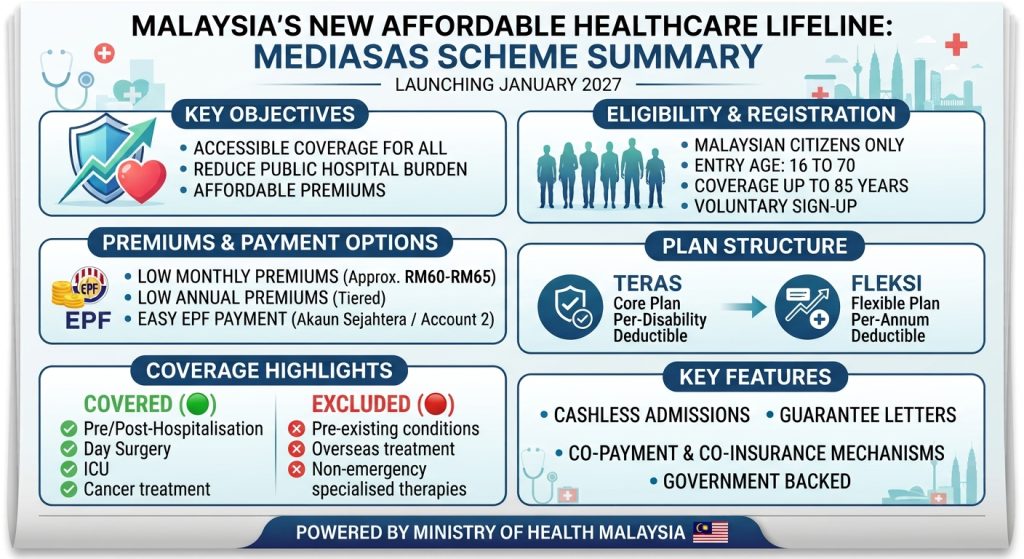
PolicyStreet co-founder and chief operating officer Wilson Beh said the government’s affordable medical insurance plan, scheduled for introduction in January 2027, could improve access to medical protection for uninsured and underinsured Malaysians, although its long-term effectiveness would depend on whether coverage remained affordable.
He said MediAsas was one component of the broader RESET Strategy, which would need to address underlying cost pressures in private healthcare to sustain the plan’s affordability and level of protection.
“MediAsas should therefore be judged not just by initial enrolment, but by whether Malaysians can afford to retain their coverage and rely on it when they need care,” he told Sarawak Tribune.
He noted that his assessment was based on MediAsas design and policy details publicly available as at Oct 14, with final product features and implementation arrangements potentially subject to change ahead of the planned launch.
He said MediAsas addressed three major barriers to obtaining medical insurance, namely convenience, affordability and relevance.
“Employer-facilitated enrolment, supported by a first-year subsidy for eligible small and medium enterprises (SMEs), could make it easier for workers to obtain medical coverage.”
He said MediAsas also offered a significantly lower-cost entry point than conventional medical cards, with annual coverage limits designed to provide meaningful medical protection.
For individuals with pre-existing medical conditions, he said the plan provided a more structured pathway to be considered for coverage.
“Its seven-year no-look-back policy would also give long-term policyholders greater certainty about their protection, addressing another barrier to obtaining and maintaining medical insurance.”
Beyond the affordability of premiums, Beh said consumers needed to understand the extent of their coverage and how much they might still have to pay when receiving medical treatment.
He said the introduction of standardised hospital billing categories from 2027, alongside the phased implementation of Diagnosis-Related Group (DRG) pricing, should make treatment costs more transparent and provide consumers with a better basis for comparing medical insurance plans.
“Under the announced arrangements, MediAsas would use hospital payments based on diagnosis and treatment.”
However, he said the reforms alone would not make insurance products directly comparable because coverage and out-of-pocket expenses could still vary significantly between plans.
“Consumers should therefore look beyond monthly premiums to compare annual coverage limits, eligible treatments, exclusions, and applicable deductibles or co-payments.
“These determine not only what a policy covers, but also how much financial protection it provides when a claim is made,” he said.
He said hospital choice was another consideration because MediAsas would have a designated list of Preferred In-Network Providers.
“Consumers would need to establish whether their preferred hospital was included in the network, how this could affect treatment costs and out-of-pocket expenses, and whether cashless admission was available.”
He said they should also understand the applicable policy terms when comparing MediAsas with existing medical insurance plans.
To make these differences easier to understand, he said participating insurers should provide illustrative treatment scenarios showing estimated medical expenses, insurance payouts and potential out-of-pocket payments.
“Creating meaningful transparency means helping Malaysians understand not just what they pay for insurance, but the extent of their coverage and the potential costs they may still need to bear when they require medical care,” he said.
On employer participation, Beh said the government’s RM200 first-year premium subsidy per employee could provide an effective starting point for SMEs that had yet to offer medical coverage to their workers.
He said the subsidy would apply to eligible SMEs with fewer than 75 employees, subject to a limit of 50 employees per company.
“MediAsas is an individual insurance plan under the details available so far, allowing employers to facilitate coverage without immediately committing to the cost of a group medical insurance policy.
“Employees would generally bear the remaining premium unless their employers chose to contribute, although the final arrangements for premiums beyond the RM200 annual subsidy had not been announced.”
He said the incentive could allow smaller employers to assess employee demand for medical protection before deciding whether to invest in broader employee benefits.
Drawing on his experience working with SMEs through PolicyStreet, he said medical benefits were often an important consideration in attracting and retaining employees.
“Strong participation in MediAsas could therefore indicate to employers that medical coverage is valued by their workforce, potentially strengthening the case for introducing more comprehensive benefits.”
However, Beh said continued employer participation after the first-year subsidy ended would depend on affordability and administrative convenience.
“Employers would need to weigh the cost of contributing towards individual MediAsas premiums against the potential advantages of group medical insurance, which could offer more competitive rates depending on workforce size and coverage requirements.
“Administrative considerations would also influence their decisions, particularly the coordination required to support individual policies compared with the centralised management available through group employee benefits arrangements.
“For SMEs managing tight budgets and competing priorities, medical benefits may not always be an immediate priority,” he said.
Beh said he supported the government’s approach to lowering the initial barrier to medical insurance uptake, allowing smaller employers to assess demand and consider how best to provide medical protection over the long term.
On the proposal to allow Employees Provident Fund (EPF) members below 55 to use their Account Sejahtera savings to pay MediAsas premiums, Beh said the option could make medical insurance more accessible.
However, he said members needed to consider how using retirement savings for premiums could affect their long-term financial security.
He said they should assess the effect of withdrawals on the adequacy of their retirement funds and the potential compounded returns those savings could otherwise generate.
“Medical protection and retirement savings are both important pillars of long-term financial security, and consumers need to balance the two,” he said.
He said consumers should first assess whether they could afford insurance premiums through regular income, existing savings or adjustments to discretionary spending before drawing on their EPF funds.
“They should also review their existing medical coverage, including employer-provided benefits, to determine whether MediAsas would provide additional protection.”
He said the decision to use retirement savings should reflect each individual’s financial circumstances and retirement goals, particularly whether projected savings would remain sufficient after accounting for withdrawals.
For members uncertain about their retirement needs, he suggested using EPF’s Retirement Goal Calculator to assess their financial position before deciding whether to use their savings for medical insurance.
“The objective is to ensure Malaysians can access medical protection today without losing sight of their financial security in retirement,” he said.
Why it is new
- No engagement data available from these sources; score uses mention signals only
Attention graph
Timeline
- DetectedFirst detected (Sarawak Tribune) source
Where it started
How it spread
- Step 1News outletsSarawak Tribune09:22
Internet reaction
No social or community posts about this yet from the platforms we ingest.
What we know
- Covered by 1 established outlet(s): Sarawak Tribune
What we don’t know
- Independent confirmation is missing; treat specifics as unverified
- Only one source so far
All sources (1)
Attention is measured from these mentions only. Platforms shown: News. We never invent signals for platforms we do not ingest.
Follow for your feed
Follow the topic or the people and places in this story and they shape your For you page. Kept in this browser only.