Astronomers Detect Potential ‘Second Generation’ Planet Around Dying Stellar White Dwarf
Only social or community posts, or a single source.
What happened
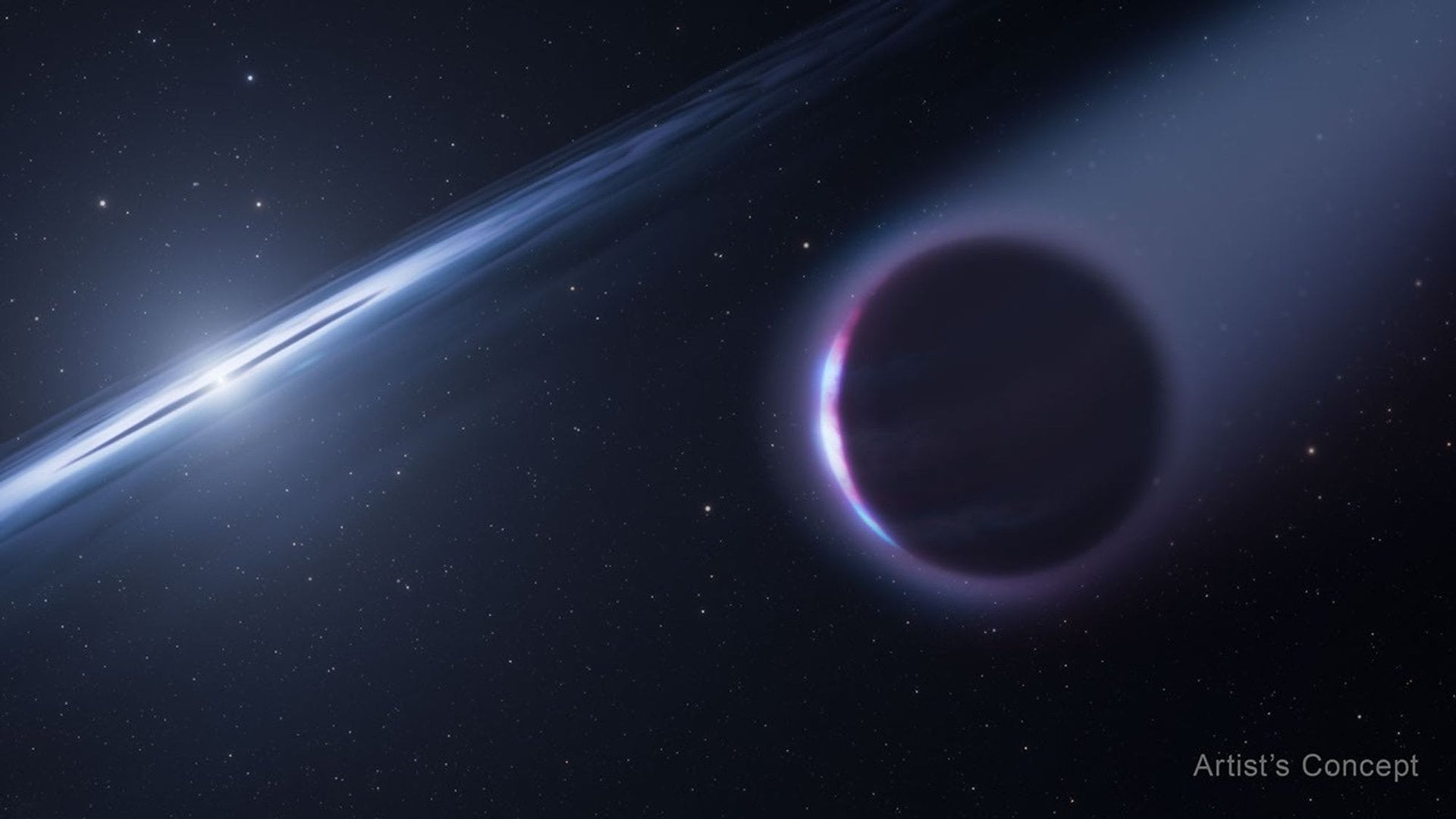
Astronomers have potentially detected the first known second-generation planet; in this case, a Jupiter-like planet that likely formed from the accretion of debris cast off by a dying stellar white dwarf. Identified as HS 0209+0832, this particular white dwarf’s unusual atmospheric makeup is what first prompted the University of Warwick-led team to reanalyze 25-year-old data from NASA’s Hubble Space Telescope. (Google News Malaysia (ZH), 10:49)
Read the reporting
2 reportsAstronomers Detect Potential ‘Second Generation’ Planet Around Dying Stellar White Dwarf
Astronomers have potentially detected the first known second-generation planet; in this case, a Jupiter-like planet that likely formed from the accretion of debris cast off by a dying stellar white dwarf. Identified as HS 0209+0832, this particular white dwarf’s unusual atmospheric makeup is what first prompted the University of Warwick-led team to reanalyze 25-year-old data from NASA’s Hubble Space Telescope.
Located some 270 light years away in the southern constellation of Cetus, HS 0209+0832 has an atmosphere that includes zinc, copper, aluminum, silicon, and titanium. But most importantly, it includes the extraordinarily rare earth element niobium which the U.K.-led team found at levels more than 1000 times that of our Sun.
The team noted in a paper appearing in the journal Nature Astronomy that they think the most likely explanation is that the white dwarf, HS 0209+0832, is feeding off a newly formed, second-generation giant planet --- one that condensed out of a new disc of material formed during the star's death, the University of Warwick reports.
We now know that elements like niobium can be used as signatures of accretion from second generation planets, Jamie Williams, the Nature Astronomy paper’s lead author and a doctoral candidate in physics at the University of Warwick in the U.K., told me via email. So, observing more hot white dwarfs with Hubble could discover more candidates, Williams told me.
Using archival data from Hubble and the FUSE (Far Ultraviolet Spectroscopic Explorer) telescope as well as NASA’s TESS (Transiting Exoplanet Survey Satellite), the researches found that the putative planet is orbiting HS 0209+0832 on the incredibly short orbit of only 4.4 days.
Most of all, the discovery demonstrates that close-in planets around white dwarfs can form after the star’s hydrogen-burning main sequence.
For decades, astrophysicists have argued over whether it would be possible for a planet to form from the detritus of a stellar remnant, and this detection marks the first time that has happened.
This result opens a door to the idea that even in their death throes, solar-type stars can produce planets which might potentially offer limited habitability.
As for the smoking gun of niobium?
Niobium is found in our solar system and has multiple uses on Earth, including in jewelry and medical imaging devices, Williams notes in a statement. But the amount Hubble found in the HS 0209+0832 system points to a planet forming not from a star’s birth, but from the material ejected as it dies, Williams notes.
Rare Nuclear Process
Niobium and other elements heavier than iron are not formed in the cores of stars by thermonuclear fusion, Nicholas Stone, a theoretical astrophysicist at the University of Wisconsin – Madison and one of the paper’s co-authors, says in a statement.
Instead, these heavy elements can only be synthesized in the exotic conditions that briefly emerge inside dying stars, Stone says in statement.
The means by which such large amounts of niobium may have formed in this white dwarf is dominated by the slow neutron capture process which enables the creation of elements heavier than iron. Such elements are formed in the so-called s-process by light elements successively capturing neutrons to create heavier elements.
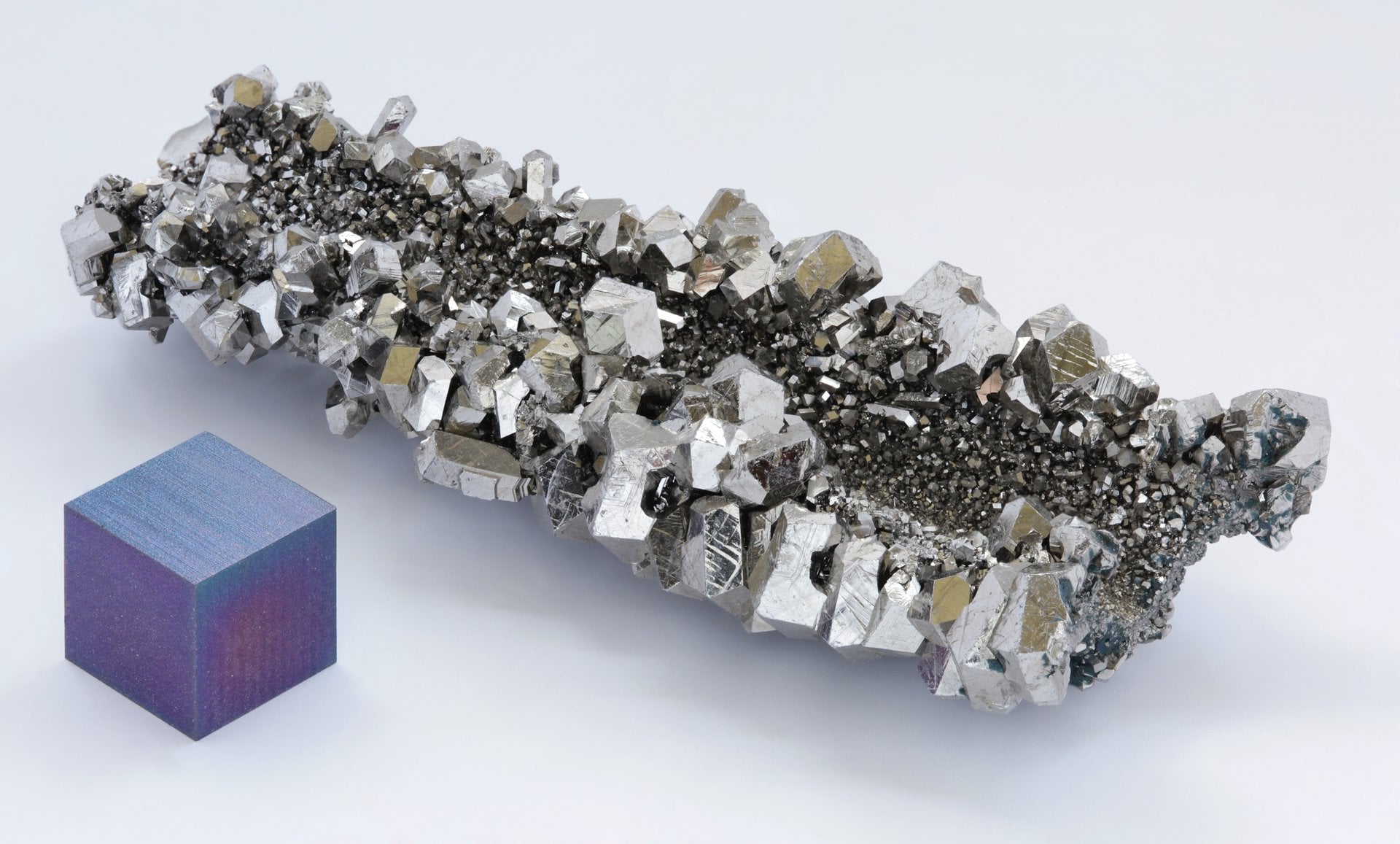
High purity (99.995 % = 4N5) niobium crystals, electrolytic made, as well as a high purity (99.95 % = 3N5) 1 cm3 anodized niobium cube for comparison. Credit: Wikipedia
The presence of niobium is a signpost of these ‘death’ throes, and the expulsion of the dying star's innards into space, Stone says in a statement.
Rocky second generation planets could also form in a similar process.
We don't have enough statistics to confidently predict how many second-generation planets are out there, says Williams. But given that HS 0209+0832 formed from a sun-like star, it could be possible to form these type planets around many stars, he says.
A Close Orbiting Planet
As a white dwarf cools, it will remain the same temperature for up to tens of billions of years, meaning a close-in rocky planet could remain in the habitable zone for much longer than our own Earth, says Williams.
Such planets would need to be located very close to the white dwarf, at an average distance of only 2.7 million km from the dying star. But in theory, such rocky planets might remain habitable for tens of billions of years.
Long Term Habitability
Even so, the white dwarf would be much fainter than the Sun, especially in the visible wavelengths and could remain warm for tens of billions of years.
In fact, our own Sun will eventually enter its red giant phase and end its life as a white dwarf, creating its own set of s-processes that could seed a follow-on second generation planet of our own. But by then, Earth itself will likely be a distant memory having been either engulfed by our expanding red giant Sun or burned to an unrecognizable crisp by our star’s own endgame.
As for a garden-variety White Dwarf spawning a habitable planet?
The white dwarf would be enough to warm the planet, says Williams. But it would probably be difficult to start life there because it probably wouldn’t receive the same molecules as Earth, he says.
Why it is over
- No engagement data available from these sources; score uses mention signals only
Attention graph
Not enough history in this window yet. The engine measures every five minutes.
Timeline
Where it started
How it spread
- Step 1News outletsGoogle News Malaysia (ZH)10:49
Internet reaction
No social or community posts about this yet from the platforms we ingest.
What we know
- Covered by 2 established outlet(s): Google News Malaysia (ZH)
What we don’t know
- Independent confirmation is missing; treat specifics as unverified
All sources (2)
Attention is measured from these mentions only. Platforms shown: News. We never invent signals for platforms we do not ingest.
Follow for your feed
Follow the topic or the people and places in this story and they shape your For you page. Kept in this browser only.