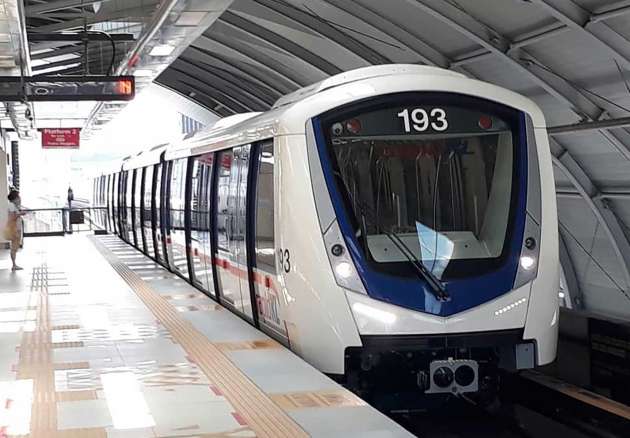
LRT Kelana Jaya Line incidents up this year, main cause is e-brake – overhauling not feasible, new trains coming
Only social or community posts, or a single source.
What happened
Noticed more breakdowns or problems on the LRT Kelana Jaya Line lately? It’s true, and Prasarana – which operates Rapid public transport in the Klang Valley – has acknowledged the reliability issues of the train line with the highest volume. (Paul Tan's Automotive News, 14:01)
Read the reporting
1 reportLRT Kelana Jaya Line incidents up this year, main cause is e-brake – overhauling not feasible, new trains coming
Noticed more breakdowns or problems on the LRT Kelana Jaya Line lately? It’s true, and Prasarana – which operates Rapid public transport in the Klang Valley – has acknowledged the reliability issues of the train line with the highest volume.
Prasarana acting president and group CEO Dr Prodyut Dutt said that from January to August this year, the KJ Line recorded one incident for every 749 km travelled, compared with one incident for every 1,066 km during the same period last year.
“There is no denying the fact that we are having more incidents this year than we had last year. On the Kelana Jaya Line, that represents a deterioration of about 30%,” he told Bernama , adding that in contrast, the Ampang Line and Monorail recorded performance improvements of 20 and 80% respectively.
So what’s behind the problems? Dutt said that 90% of disruptions on the KJ Line stem from rolling stock issues, with two-thirds of it triggered by the automated Emergency Braking (EB) safety system.
EB automatically activates when onboard tachometer sensors – components that monitor the speed of a train’s wheels – detect speed discrepancies above 5%. The sensors can be affected by cable wear and track vibrations, and these contribute to the discrepancies.
The industry veteran explained that the issue was linked to the operating characteristics of the line’s Linear Induction Motor (LIM) system, which has been in service since 1998. “The design characteristic of a LIM system is that the braking is naturally very hard. Overseas operators using the same system, such as in Vancouver, face the same issues with tachometers and emergency braking,” he said.
Converting or replacing the LIM system entirely is not feasible, Dutt says, as it would necessitate replacing the entire power supply, signalling, track work and civil infrastructure. Basically, it requires too much, which means that Prasarana will have to operate within the existing design parameters.
Also not feasible is overhauling the KJ Line’s ageing trains. The fleet currently operates 74 trains across three generations, including 26 first-generation four-car train units that have been in service for over 17 years. Overhauling trains aged 15 years and above would cost almost 90% of the price of a new unit (classic car owners, you’ll understand this), and that’s why Prasarana has ordered 26 new train sets worth more than RM1 billion from China’s CRRC.
The first batch of the new trains are scheduled to arrive in March 2029, with two sets expected to be delivered each month thereafter. This means that Prasarana, and commuters, will have to bear with the old machines in the meantime. That said, the operator is implementing interim measures and ‘engineering interventions’ to improve operational stability before the new trains arrive.
The efforts include 24-hour maintenance operations across depots and specialised workshops to inspect, service and rectify train systems continuously. However, global supply chain bottlenecks remain a challenge for Prasarana, with critical components such as tachometers facing long lead times of eight to 12 months, Dutt says.
“Cost is not the issue because the government has been very supportive through government guarantees and approved five-year funding programmes. Our main challenge is the lead time for spare parts,” he said.
Prasarana definitely isn’t sitting still waiting for new trains to arrive. In fact a major overhaul of the train bogies – the heavy undercarriage structures that house the wheels, suspension and braking systems – on the nine-year-old third-generation trains is scheduled to begin in mid-2027.
The post LRT Kelana Jaya Line incidents up this year, main cause is e-brake – overhauling not feasible, new trains coming appeared first on Paul Tan's Automotive News .
Why it is new
- No engagement data available from these sources; score uses mention signals only
Attention graph
Timeline
- DetectedFirst detected (Paul Tan's Automotive News) source
Where it started
How it spread
- Step 1NewsPaul Tan's Automotive News14:01
Internet reaction
- LRT Kelana Jaya Line incidents up this year, main cause is e-brake – overhauling not feasible, new trains comingu/Danny Tan · Paul Tan's Automotive News · 14:01 · EN
What we know
- Nothing independently established yet.
What we don’t know
- No established news outlet has reported this yet; details come from social or community posts
- Independent confirmation is missing; treat specifics as unverified
- Only one source so far
All sources (1)
Attention is measured from these mentions only. Platforms shown: News. We never invent signals for platforms we do not ingest.
Follow for your feed
Follow the topic or the people and places in this story and they shape your For you page. Kept in this browser only.